Halloween party ideas 2015

MEREKA MENCARI TUHAN 


Di Barat saat ini, pencarian akan Tuhan tidak lagi dengan jalan pengalaman. Mereka lebih cenderung mencarinya dengan jalan pengetahuan atau akal budi. Maka, jika akal budi tak menemukannya, Tuhan itu pun langsung disingkirkan dari kehidupan. Kehidupan dengan Tuhan—dengan demikian—berarti kehidupan dengan akal budi yang mampu memahami Tuhan.

Di Timur, pencarian akan Tuhan lebih cenderung dengan jalan pengalaman. Itulah sebabnya Tuhan mereka adalah Tuhan yang dihidupi dan bukan Tuhan yang dipahami. Orang Timur tidak terlalu repot dengan memahami Tuhan. Mereka lebih cenderung repot dengan mengalami Tuhan.

Cara hidup orang Timur ini saya lihat hari ini. Mereka datang dari berbagai wilayah di sekitar Danau Kota Panjang, Riau untuk mengikuti perayaan Ekaristi. Dengan perahu kecil, mereka datang berkelompok 5-8 orang. Mereka terbiasa mengarungi danau itu sekitar 45 menit sampai 1 jam untuk sampai di Gereja Katolik St Antonius. Perahu itu hanya didorong oleh mesin berkekuatan 1 Kilo. Tampak seperti mesin potong rumput yang digendong. Meski kecil, mesin itu mampu mendorong perahu berisi 5-8 orang.


Boleh jadi orang kota melihatnya luar biasa. Tetapi bagi mereka ini biasa. Mereka biasa datang bertemu Tuhan. Tuhan bagi mereka tetaplah Dia yang diyakini, disembah, dan dijelmakan dalam hidup. “Kami selalu datang ke gereja, kapan pun Pastor datang,” komentar Firman, salah 1 dari 3 nahkoda perahu yang menjemput kami siang ini.

Seperti mereka, kami juga mencari Tuhan. Kami berlima (Ibu Minhui, Pastor Franco, SX., dua teman dari Italia—Luca dan Lucas—serta saya sendiri) berangkat dari pastoran pada pukul 08.00. Perjalanan ini rupanya panjang. Kami melewati beberapa kabupaten sebelum sampai di dekat Danau Kota Panjang.

Perjalanan darat ini memakan waktu 3 jam. Melewati jalanan berkelok, lebar dan sempit, sedikit bergelombang, dan variasi lainnya. Saat kami tiba di dekat danau, 3 nahkoda mungil menyambut kami. Mereka rupanya sudah menyiapkan perahu. Kami lalu menurunkan perlengkapan perjalanan dari mobil dan langsung menuruni tangga menuju pelabuhan ala kadarnya.
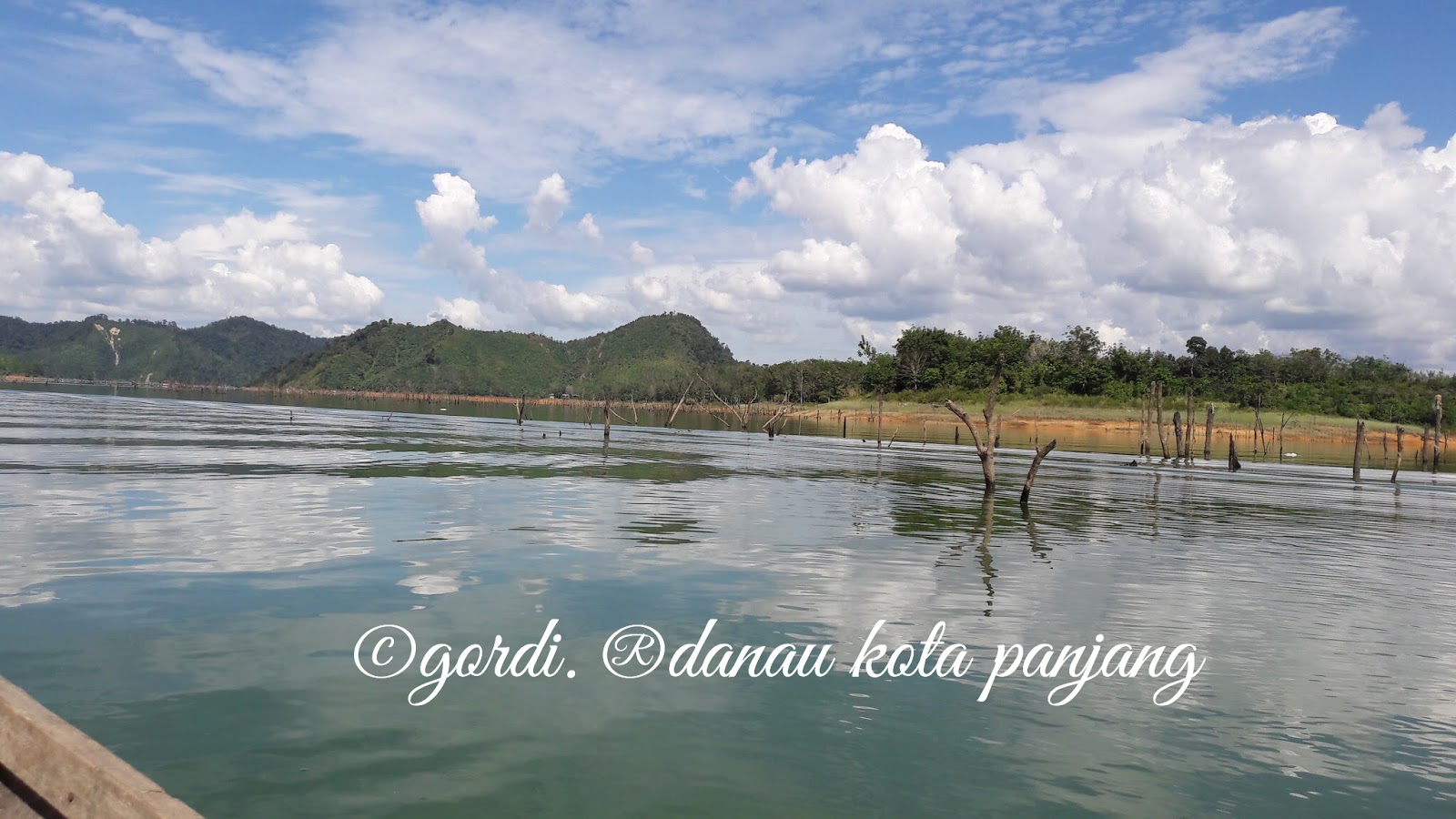

Perjalanan selanjutnya selama 45 menit adalah menyusuri danau ini. Kami dibagi dalam 2 perahu. Kami bertiga plus semua perlengkapan perjalanan. Di perahu lainnya bertiga plus 2 nahkoda Aris dan Firman. 

Perjalanan ini menjadi menarik sekali karena bumbu perjalanan yang kami nikmati. Berbagi pengalaman dengan sang nahkoda baik selama perjalanan pergi maupun pulang. Sambutan hangat dari umat. Sambutan mereka sungguh menampakkan kekayaan kehidupan mereka yang sederhana. Mereka tidak bekerja pada hari-hari kerja seperti ini tetapi rupanya mereka bekerja hanya pada pagi hari.

Saya merasa senang berada di tengah mereka. “Kalian memberi saya cinta dan kasih sayang sehingga saya merasa seperti di rumah sendiri,” kata saya pada mereka. Mereka tersenyum haru. Senyum ini mereka tampakkan selama Misa dan setelah Misa. Ibu Minhui kiranya puas melihat senyum mereka saat ia menjelaskan maksud kedatangan kami.

Senyum ini terus mereka munculkan pada saat kami makan siang bersama di rumah Ketua Stasi. Sungguh senyum yang luar biasa. Dengan senyum itu pun, kami bisa berkomunikasi. Saya membantu menerjemahkan beberapa kalimat dari bahasa Italia kepada mereka semua baik anak muda maupun orang tua. Juga untuk menjelaskan kepada teman-teman Italia tentang kalimat yang mereka sampaikan.

Tetapi terjemahan yang paling pas adalah dengan bahasa senyum dan bahasa tubuh. Kedua bahasa ini mempunyai kekuatan yang dahsyat. Akhirnya, dengan senyum ini juga, kami dan mereka mencari Tuhan hari ini. Terima Kasih Yesus atas bimbingan-Mu sepanjang perjalanan kami, dari pagi sampai sore hari ini.

BM, 10/08/2017
Gordi

FISIK TUA, SEMANGAT MUDA


Fisik tua, semangat muda. Ini kiranya bisa menggambarkan keadaan anggota kor di Pekanbaru. Sebagian dari mereka berfisik tua, tetapi sebagian besar lagi berfisik muda. Yang tua boleh jadi berjiwa muda, tetapi yang muda juga lebih bersemangat muda.

Jiwa muda ini menjiwai latihan kor malam ini. Sang dirigen di depan memimpin dengan ketagasan nan lembut. Dia tersenyum saat suara mereka bagus dan tetap tersenyum saat suara mereka kurang bagus. Namun, setelah itu, dia akan memberikan penilaian yang tegas.


Dia akan meminta untuk mengulangi beberapa bait yang salah. Permintaannya dengan senyum manis dan suara yang tegas. Tegas dan senyum kiranya sikap yang pas untuk menumbuhkan jiwa dan semangat muda. Sang dirigen kiranya tahu betul, dua sikap ini mampu mengambil hati anggota kor. Lebih dari hati, dia pun mengajak mereka untuk memberikan suara yang merdu.

Inilah pemandangan malam ini dalam latihan kor. Mereka menyanyi untuk saya yang akan menerima anugerah Agung pada 21 Oktober nanti. Mereka tidak kaget saat saya hadir ditengah mereka. Mereka biasa-biasa saja. Rupanya mereka belum tahu siapa saya. Sebagian yang sudah tahu tersenyum-senyum saja. Begitu tahu, mereka langsung kaget dan memandang ke arah saya.

Pandangan itu antara cinta dan kasih sayang. Cinta karena mereka memang mencintai saya. Kasih sayang karena mereka sudah memberikan kasih sayang itu pada saya. Mereka—meski lelah dari tempat kerja—tetap bersemangat untuk datang latihan. Mereka begitu mencintai saya. Dengan suara, gerakkan tangan, tekanan jari di tuts keyboard, pukulan tangan di tambur, dan sebagainya. Dengan alat musik, cinta dan kasih itu menjadi makin lengkap. Dengan suara merdu, cinta dan kasih itu makin bergema.

Terima kasih untuk kalian semua.

BM, 9/8/17
Gordi

GENERAL AUDIENCE POPE FRANCIS
Wednesday, 3 May 2017


Dear Brothers and Sisters,
Good morning!

Today, I would like to talk to you about my Apostolic Journey to Egypt which, with God’s help, I undertook in recent days. I went to that country, taking up a four–fold invitation: from the President of the Republic, from His Holiness, the Coptic Orthodox Patriarch, from the Grand Imam of Al–Azhar and from the Coptic Catholic Patriarch. I thank each of them for their truly warm welcome. And I thank all the people of Egypt for the participation and affection with which they experienced this visit by the Successor of Saint Peter.

The President and civil authorities took exceptional pains to ensure that this event could take place in the best possible way; so that it might be a sign of peace, a sign of peace for Egypt and for all that region, which, unfortunately, is afflicted by hostilities and terrorism. In fact, the trip’s theme was: “Pope of Peace in Egypt of Peace”.

My visit to Al–Azhar University, the oldest Islamic university and the highest academic institution of Sunni Islam had a twofold aim: that of dialogue between Christians and Muslims and, at the same time, that of promoting peace in the world. At Al–Azhar, there was a meeting with the Grand Imam, a meeting that later extended to the International Peace Conference. In this context, I offered a reflection which recognized the history of the land of Egypt as land of civilization and land of covenants. For all of humanity, Egypt is synonymous with ancient civilization, art treasures and knowledge; and this reminds us that peace is built through education, the formation of knowledge, of a humanism which includes as integral parts the religious dimension, the relationship with God, as the Grand Imam recalled in his address. Peace is also built by beginning once again from the covenant between God and man, the foundation of the covenant between all peoples based on the Ten Commandments written on the stone tablets at Sinai, but much more deeply in the heart of each man of every time and place, the law that is summarized in the two commandments of love of God and neighbour.
This same foundation is also at the basis of the building of social and civil order, in which all citizens, from every origin, culture and religion, are called to cooperate. Such a vision of healthy secularism emerged in the conversation with the President of the Republic of Egypt, in the presence of the country’s authorities and Diplomatic Corps. Egypt’s great historic and religious heritage and its role in the Middle Eastern region give it an unusual task in the journey toward stable and long-lasting peace that rests not on the law of force, but rather on the force of law.

Christians, in Egypt like in every nation on earth, are called to be the “leaven” of fraternity. This is possible if they live, within themselves, the Communion in Christ. Thanks to God, we were able to show a strong sign of communion with my dear Brother Pope Tawadros ii, Patriarch of the Coptic Orthodox. We renewed our commitment, also by signing a Common Declaration to journey together, and not to duplicate baptisms already received in the respective Churches. Together we prayed for the martyrs of the recent attacks that tragically struck that venerable Church; and their blood rendered fruitful that ecumenical encounter, in which Patriarch Bartholomew of Constantinople, the Ecumenical Patriarch, my dear Brother, also participated.

The second day of the trip was dedicated to the Catholic faithful. The Holy Mass celebrated in the stadium provided by Egyptian authorities was a celebration of faith and fraternity in which we felt the living presence of the Risen Christ. Commenting on the Gospel, I called on the small Catholic community in Egypt to relive the experience of the disciples of Emmaus: to always find in Christ, Word and Bread of Life, the joy of faith, the ardour of hope and the strength to bear loving witness that “we have encountered the Lord!”.

I spent the last phase with priests, men and women religious and seminarians at the Major Seminary. There are many seminarians. This is a consolation! It was a Liturgy of the Word in which the vows of consecrated life were renewed. In this community of men and women who have chosen to offer their life to Christ for the Kingdom of God, I saw the beauty of the Church in Egypt and I prayed for all Christians in the Middle East, that, led by their pastors and accompanied by the consecrated, they might become salt and light in those lands, in the midst of those peoples. For us, Egypt was a sign of hope, of refuge, of help. When that part of the world was starving, Jacob went there with his sons. Then, when Jesus was persecuted, he went there. For this reason, telling you about this trip means taking the path of hope. For us, Egypt is that sign of hope both for history and for the present time, of this fraternity which I wanted to tell you about.

I once again thank those who made this journey possible and all those who, in different ways, made their contribution, especially so many people who offered their prayers and their suffering. May the Holy Family of Nazareth, who migrated to the banks of the River Nile to flee from Herod’s violence, bless and always protect the people of Egypt and guide them to the path of prosperity, fraternity and peace.
Thank you!

Special greetings:
I greet the English-speaking pilgrims and visitors taking part in today’s Audience, particularly the groups from Ireland, Denmark, Finland, New Zealand, Singapore, India, the Philippines, Sri Lanka, Vietnam, Canada and the United States of America. In the joy of the Risen Christ, I invoke upon you and your families the loving mercy of God our Father. May the Lord bless you all!

On the Feast of Saints Philip and James, I hope that the memory of the Apostles, joyous proclaimers of the Risen Christ, may increase each one’s faith and strengthen each one’s witness to the Gospel.

I extend my greetings to young people, to the sick and to newlyweds. At the start of May, we call on the heavenly intercession of Mary, Mother of Jesus. Dear young people, learn to pray to her with the simple and effective prayer of the Rosary; dear sick people, may Our Lady be your support in the trial of pain; dear newlyweds, imitate her love for God and for brothers and sisters.


© Copyright - Libreria Editrice Vaticana
Powered by Blogger.