Halloween party ideas 2015

GENERAL AUDIENCE POPE FRANCIS
Saint Peter's Square
Wednesday, 3 June 2015

The family - 17. Family and poverty

Dear Brothers and Sisters, Good morning!
These Wednesdays we have been reflecting on the family and we continue forward with this topic, reflecting on the family. As of today, our catecheses open onto the consideration of the vulnerability of the family, in the living conditions that put it to the test. So many problems are testing families.

One of these trials is poverty. Let us think of the many families that live on the outskirts of major cities, as well as those in rural areas.... So much misery, so much degradation! And then, to make the situation worse, in some places there is also war. War is always a terrible thing. Moreover, it also strikes above all the civil populations, the families. Truly, war is the “mother of all poverty”, war impoverishes the family, a great predator of lives, souls and of the most sacred and beloved bonds.

Despite all this, there are many poor families who try to live their daily lives with dignity, often openly entrusting themselves to God’s blessing. This lesson, however, should not justify our indifference, but rather increase our shame over the fact that there is so much poverty! It is almost a miracle that, even in poverty, the family continues to form, and even preserve — as much as it can — the special humanity of those bonds. This fact irritates those planners of wellbeing who consider attachments, procreation and familial bonds as secondary variables to the quality of life. They don’t understand a thing! On the contrary, we should kneel down before these families, who are a true school of humanity in saving societies from barbarity.

What do we have left if we yield to the extortion of Caesar and Mammon, to violence and to money, and renounce even family ties? A new civil ethic will arrive only when the leaders of public life reorganize the social bond beginning with the perverse struggle that spirals between the family and poverty, which leads us into the abyss.

The prevailing economy is often concentrated on the enjoyment of individual wellbeing, but it largely exploits family ties. This is a serious contradiction! The boundless work of the family is not quoted in financial statements, obviously! Indeed economics and politics are misers in regards to acknowledging this. Yet, the interior formation of the person and the social flow of affections have their mainstay precisely there. Should it be removed, everything would fall apart.

It is not merely a question of bread. We are talking about work, talking about education, talking about health. It is important that this be clearly understood. We are always quite moved when we see images of sick and malnourished children that are shown in so many parts of the world. At the same time, we are also deeply moved by the twinkle in the eyes of many children, deprived of everything and in schools built from nothing, who are proud when showing off their pencil and their notebook. And how lovingly they look at their teacher! Children already know that man does not live on bread alone! And as for family affection; when there is destitution children suffer because they want love, family ties.

We Christians have to be ever closer to the families whom poverty puts to the test. But think, all of you know someone: a father without work, a mother without work ... and this makes the family suffer, the bonds are weakened. This is terrible. Indeed, social destitution strikes the family and sometimes destroys it. The lack, loss or strong instability of employment weigh heavily upon family life, imposing a substantial strain on relationships. Living conditions in the poorest neighbourhoods, with housing and transportation problems, as well as reduced social, health and educational services, bring about further difficulties. Adding to these material factors is the damage caused to the family by the pseudo-models spread by the mass media on the basis of consumerism and the cult of appearances, which influence the poorest social classes and increase the breakdown of family ties. Take care of families, attend to the attachment, when destitution puts the family to the test!

The Church is mother, and must not forget this drama of her children. She too must be poor, to become fruitful and respond to so much poverty. A poor Church is a Church that practices voluntary simplicity in her life — in her very institutions, in the lifestyle of her members — to break down every dividing wall, especially to the poor.
Prayer and action are needed. Let us pray earnestly that the Lord stir us, to render our Christian families leaders of this revolution of familial proximity, that is now so essential for us! The Church is made of it, of this familial proximity. Let us not forget that the judgement of the needy, of the small and of the poor prefigures the judgment of God (Mt 25:31-46). Let’s not forget this and let’s do all we can to help families to go forward in the trial of poverty and destitution which strikes attachments and family bonds. I would like to read once again the Bible test that we heard at the beginning, and each of us think about the families who are tried by destitution and poverty, the Bible reads like this: “My son, deprive not the poor of his living, and do not keep needy eyes waiting. Do not grieve the one who is hungry, nor anger a man in want. Do not add to the troubles of an angry mind, nor delay your gift to a beggar. Do not reject an afflicted suppliant, nor turn your face away from the poor. Do not avert your eye from the needy, nor give a man occasion to curse you” (Sir 4:1-5a). For this is what the Lord will do — so it says in the Gospel — if we do not do these things.

Special greetings:
I greet the English speaking pilgrims and visitors taking part in today’s Audience, including those from Ireland, Hong Kong, Indonesia, Japan, the Philippines, Taiwan, Canada and the United States. I pray that your visit to Rome may strengthen your faith in the Lord. In a particular way I wish to express my closeness to the Chinese people in these difficult moments after the ferry disaster in the Yangtze River. I pray for the victims, their families and for all involved in the rescue efforts. Upon all of you and your loved ones, I invoke the Lord Jesus’ abundant blessings of peace and joy. May God bless you all!

I turn a special thought to the workers of the Whirlpool factory in Carinaro, and I hope that their serious employment situation may be rapidly and equitably resolved, with respect for the rights of all, especially the families. The situation in the entire country is particularly difficult. It is important that there be an incisive commitment to opening pathways of hope.

Finally a greeting to young people, to the sick and to newlyweds. The month of June is dedicated to devotion to the Most Sacred Heart of Jesus. May he teach you, dear young people, the beauty of love and of feeling loved; may he be your support, dear sick people, in trials and in suffering; and may he sustain you, dear newlyweds, in your conjugal journey.

© Copyright - Libreria Editrice Vaticana

ANGELUS POPE FRANCIS
Saint Peter's Square
Sunday, 31 May 2015

Dear Brothers and Sisters, Good morning and happy Sunday!
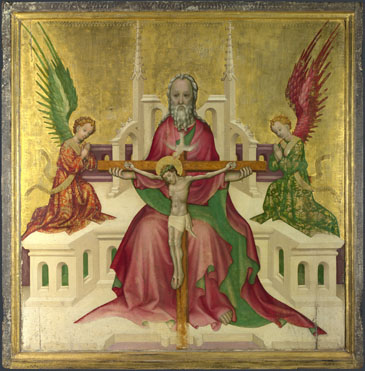
Today we are celebrating the feast of the Most Holy Trinity, which reminds us of the mystery of one God in three Persons: the Father, the Son and the Holy Spirit. The Trinity is the communion of Divine Persons who are one with the others, one for the others, one in the others: this communion is the life of God, the mystery of the love of the Living God. Jesus revealed this mystery to us. He spoke to us of God as the Father; He spoke to us of the Spirit; and He spoke to us of Himself as the Son of God. Thus He revealed this mystery to us. After He rose, He sent the disciples to evangelize to the peoples, He told them to baptize them “in the name of the Father and of the Son and of the Holy Spirit” (Mt 28:19). This command is entrusted by Christ in all ages to the Church, which has inherited the missionary mandate from the Apostles. He also directs it to each one of us who, through the power of Baptism, are part of his Community.

Therefore, today’s liturgical solemnity, while making us contemplate the amazing mystery from which we come and toward which we are going, renews for us the mission of living in communion with God and living in communion among ourselves on the model of the divine communion. We are called to live not as one without the others, above or against the others, but onewith the others, for the others, and in the others. This means to accept and witness in harmony the beauty of the Gospel; experiencing love for one another and for all, sharing joy and suffering, learning to ask and grant forgiveness, appreciating various charisms under the guidance of Pastors. In a word, we have been entrusted with the task of edifying ecclesial communities which increasingly become families, capable of reflecting the splendour of the Trinity and evangelizing not only with the words but with the power of the love of God that lives within us.

The Trinity, as I said, is also the ultimate goal toward which our earthly pilgrimage is directed. The journey of Christian life is indeed essentially a “Trinitarian” journey: the Holy Spirit guides us to full knowledge of Christ’s teachings, and also reminds us what Jesus taught us. Jesus, in turn, came into the world to make the Father known to us, to guide us to Him, to reconcile us with Him. Everything in Christian life revolves around the Mystery of the Trinity and is fulfilled according to this infinite mystery. Therefore, we seek to always hold high the “tone” of our life, remembering what goal, what glory we exist for, work for, struggle for, suffer for; and what immense reward we are called to. This mystery embraces our entire life and our entire Christian being. We remember it, for example, each time we make the sign of the Cross: in the name of the Father, of the Son and of the Holy Spirit. And now I invite you, all together, and out loud, to make this sign of the Cross: “In the name of the Father and of the Son and of the Holy Spirit!”.

On this last day of the month of May, the Marian month, let us entrust ourselves to the Virgin Mary. May she who, more than any other being, knew, worshiped, loved the mystery of the Most Holy Trinity, lead us by the hand; help us to grasp in the world’s events the signs of the presence of God, the Father and Son and Holy Spirit; enable us to love the Lord Jesus with all our heart, to walk toward the vision of the Trinity, the marvelous destination toward which our life is drawn. Let us also ask her to help the Church to be the mystery of communion and hospitable community, where all persons, especially the poor and the marginalized, may find welcome and feel themselves the wanted and beloved children of God.

After the Angelus:
Today in Bayonne, France, the priest Louis-Edouard Cestac, founder of the Sisters Servants of Mary, is being proclaimed Blessed. His witness of love for God and for neighbour is, for the Church, a new impetus to live the Gospel of Charity with joy.
I greet all of you, dear Romans and pilgrims: families, parish groups, associations, schools.

I greet the young people who have received or are preparing to receive Confirmation, encouraging them to be joyful witnesses to Jesus.

At the end of the month of May, I join spiritually in the many expressions of devotions to Mary Most Holy.

May Our Lady help every family to be a “welcoming home”. This Thursday in Rome we will have the traditional procession of the Corpus Christi. At 7:00 pm in the Square of St John Lateran I will celebrate Holy Mass, and then we will adore the Most Holy Sacrament, walking to the Square of St Mary Major. I invite you here and now to take part in this solemn public act of faith and love for Jesus in the Eucharist, present in the midst of his people. Before ending, let us once again make the sign of the Cross, out loud, everyone! “In the name of the Father and of the Son and of the Holy Spirit”, remembering the mystery of the Holy Trinity.

I wish everyone a happy Sunday. Please, do not forget to pray for me. Enjoy your lunch. Arrivederci!

© Copyright - Libreria Editrice Vaticana

GENERAL AUDIENCE POPE FRANCIS
Saint Peter's Square
Wednesday, 27 May 2015

The family - 16. Engagement

Dear Brothers and Sisters, Good Morning!

Continuing these catecheses on the family, today I would like to speak about engagement. Engagement — one hears it in the word — has to do with trust, confidence, reliability. Confidence in the vocation that God gives, since marriage is first and foremost the discovery of a call from God. Certainly it is a beautiful thing that young people today can choose to marry on the basis of mutual love. But the very freedom of the bond requires a conscious harmony in the decision, not just a simple understanding of the attraction or feeling, for a moment, for a short time ... it calls for a journey.

Engagement, in other words, is the time when the two are called to perform a real labour of love, an involved and shared work that delves deep. Here they discover one another little by little, i.e. the man “learns” about woman by learning about this woman, his fiancée; and the woman “learns” about man by learning about this man, her fiancé. Let us not underestimate the importance of this learning: it is a beautiful endeavour, and love itself requires it, for it is not simply a matter of carefree happiness or enchanted emotion. The biblical account speaks of all creation as a beautiful work of God’s love. The Book of Genesis says that: “God saw everything that he had made, and behold, it was very good” (Gen 1:31). Only when it is finished does God “rest”. We understand from this image that God’s love, which brought forth the world, was not an impromptu decision. No! It was a beautiful work. The love of God created the concrete conditions for an irrevocable covenant, one that is strong and lasting.

The covenant of love between man and woman — a covenant for life — cannot be improvised. It isn’t made up one day to the next. There is no marriage express: one needs to work on love, one needs to walk. The covenant of love between man and woman is something learned and refined. I venture to say it is a covenant carefully crafted. To make two lives one is almost a miracle of freedom and the heart entrusted to faith. Perhaps we should emphasize this point more, because our “emotional coordinates” have gone a bit askew. Those who claim to want everything right away, then back out of everything — right away — at the first difficulty (or at the first opportunity). There is no hope for the trust and fidelity entailed in the gift of self, if prevailing tendency is to consume love like some kind of “supplement” for mental and physical well-being. This is not love! Engagement focuses on the will to care for something together that must never be bought or sold, betrayed or abandoned, however tempting the offer may be.

God, too, when he speaks of the covenant with his people, does so several times in terms of betrothal. In the Book of Jeremiah, in speaking to the people who had distanced themselves from him, he reminds the people of when they were the “betrothed” of God, and he says: “I remember the devotion of your youth, your love as a bride” (cf. 2:2). God took this path of betrothal. He then also made a promise: we heard it at the beginning of the audience, in the Book of Hosea: “I will betroth you to me for ever; I will betroth you to me in righteousness and in justice, in steadfast love, and in mercy. I will betroth you to me in faithfulness; and you shall know the Lord” (2:19-20).

The road the Lord takes with his people on this betrothal journey is a long one. At the end, God espouses his people in Jesus Christ. In Jesus he marries the Church. The People of God is Jesus’ Bride. But what a long road! And you Italians, in your literature you have a masterpiece on betrothal, The Betrothed. Young people need to know about it and read it. It is a masterpiece that tells the story of an engaged couple who have endured great suffering, they travel a road filled with many struggles, until at last they arrive at marriage. Don’t leave aside this masterpiece on betrothal, which Italian literature has given especially to you. Go on, read it and you will see the beauty, the suffering, but also the faithfulness of the betrothed.

The Church, in her wisdom, guards the distinction between being engaged and being spouses — it’s not the same — especially in view of the delicateness and depth of this test. Let us be careful not to disregard lightheartedly the wisdom of this teaching, which also comes from the experience of happy married life. The powerful symbols of the body hold the keys to the soul: We cannot treat the bonds of the flesh lightly, without opening some lasting wound in the spirit (cf. 1 Cor 6:15-20).

Of course, today’s culture and society have become rather indifferent to the delicateness and seriousness of this step. On the other hand, it cannot be said that they are generous to young people who are determined to make a home and welcome children. Indeed, often they put up a thousand obstacles, both psychological and practical. Engagement is a path of life that has to ripen like fruit; it is a way of maturing in love, until the moment it becomes marriage.

Pre-marriage courses are a special expression of preparation. And we see so many couples, who perhaps come to the course somewhat reluctantly: “But these priests make us take a course! But why? We already know...” and they go reluctantly. But afterwards they are happy and grateful, because they have found there the opportunity — sometimes the only one — to reflect on their experience in non-trivial terms. Yes, many couples are together a long time, perhaps also in intimacy, sometimes living together, but they don’t really know each other. It seems curious, but experience shows that it’s true. Therefore engagement needs to be re-evaluated as a time of getting to know one another and sharing a plan. The path of preparation for marriage should be implemented from this perspective, also with the benefit of the simple but intense witness of Christian spouses. And also by focusing on the essentials: the Bible, by consciously rediscovering it together; prayer, in its liturgical dimension, but also in “domestic prayer” to live out in the home, the Sacraments, the Sacramental life, Confession, ... where the Lord comes to abide in the engaged couple and prepare them truly to receive one another “with the grace of Christ”; and fraternity with the poor and those in need, who lead us to live soberly and to share.

Engaged couples who commit themselves to this path both grow, and all of this leads to preparing for a beautiful celebration of Marriage in a different way, not in a worldly way, but in a Christian way! Let us consider these words of God we have heard, when he speaks to his people as bridegroom to his future bride: “I will betroth you to me for ever; I will betroth you to me in righteousness and in justice, in steadfast love, and in mercy. I will betroth you to me in faithfulness; and you shall know the Lord” (Hos 2:19-20). May every engaged couple think of this and say to one another: “I will take you as my bride, I will take you as my bridegroom”. Wait for that moment. It is a moment, it is a path that goes slowly ahead, but it is a path of maturation. The steps of the journey should not be rushed. This is how we mature, step by step.

The time of betrothal can truly become a time of initiation, into what? Into surprise. Into the surprise of the spiritual gifts with which the Lord, through the Church, enriches the horizon of the new family that stands ready to live in his blessing.

I invite you now to pray to the Holy Family of Nazareth: Jesus, Joseph and Mary. Pray that the family may make this journey of preparation; and pray for couples who are betrothed. Let us pray to Our Lady all together, a Hail Mary for all engaged couples, that they may understand the beauty of this journey towards Marriage.
[Hail Mary…]
And to engaged couples who are here in the square: “Enjoy the journey of engagement!”.

Special greetings:
I greet the English-speaking pilgrims and visitors taking part in today’s Audience, including those from Great Britain, Switzerland, China, India, Indonesia, Japan, Canada and the United States of America. Upon all of you, and your families, I invoke an abundance of joy and peace in the Lord Jesus. God bless you all!

A special thought to young people, to the sick and to newlyweds. Yesterday was the memorial of St Philip Neri, the fifth centenary of whose birth we are celebrating. May his care for the oratory inspire you, dear young people, to witness the faith in your life with joy; may his abandonment to Christ the Saviour sustain you, dear sick people, in the moments of greatest discomfort; may his apostolate to the peripheries invite you, dear newlyweds, to support the weakest and the neediest in your families.

© Copyright - Libreria Editrice Vaticana

GENERAL AUDIENCE POPE FRANCIS
Saint Peter's Square
Wednesday, 20 May 2015

The family - 15. Education

Today, dear brothers and sisters, I would like to welcome you because I saw among you many families, Good morning to all the families! Let us continue to reflect on the family. Today we will pause to reflect on an essential characteristic of the family, the natural vocation to educate children so they may grow up to to be responsible for themselves and for others. What we heard from the Apostle Paul, at the start, is very beautiful: “Children, obey your parents in everything, for this pleases the Lord. Fathers, do not provoke your children, lest they become discouraged” (Col 3:20-21). This is a wise rule: children should be raised to listen to their parents and obey their parents, who, in turn, should not order them around in a negative way, so as not to discourage the children. Children, indeed, must grow without becoming discouraged, step by step. If you parents say to your children: “Let’s climb this ladder” and you take them by the hand and, step by step, help them climb, things will go well. But if you say: “Go up!” — “But I can’t” — “Go!”, this is called provoking your children, asking them to do things they don’t have the ability to do. That is why the relationship between parents and children must be one of wisdom, of a great balance. Children, obey your parents, this pleases God. And you parents, don’t provoke your children by asking of them things they can’t do. And this needs to be done so that children can grow up to be responsible for themselves and for others.

It would seem like an obvious statement, there are difficulties still in our times. It is hard to educate when parents only see their children in the evening, when they come home tired from work. Well, those who are fortunate enough to work! It is even more difficult for parents who are separated, who are weighed down by their condition: the poor dears, they have had real hardships, they have separated and frequently the child is taken hostage and the father speaks ill of the mother, and the mother speaks ill of the father, and so much harm is done. But I say to separated parents: never, never, never take your child hostage! You separated because of many difficulties and reasons, life has given you this trial, but the children should not be the ones to carry the weight of this separation, they should not be used as hostages against the other spouse, they should grow up hearing their mother speak well of their father, even though they are not together, and the father speak well of their mother. For separated parents this is very important and very difficult, but they can do it.

Above all, the question is: how should we educate? What tradition do we have today to pass on to our children?

Intellectual “critics” of every kind have silenced parents in countless ways, in order to protect the younger generations from the damage — real or presumed — of family education. The family stands accused, among other things, of being authoritarian, of favoritism, of conformism, of the emotional repression that generates conflict.

In fact, a rift has opened up between the family and society, between the family and school, the educational pact today has been broken; and thus, the educational alliance between society and the family is in crisis because mutual trust has been undermined. There are many symptoms. For example, at school relationships between parents and teachers have been compromised. At times there is tension and mutual distrust; and naturally, the consequences fall on the children. On the other hand, the number of so-called “experts” has multiplied, and they have assumed the role of parents in even the most intimate aspects of education. With regard to emotional life, personality and development, rights and duties, these “experts” know everything: objectives, motivations, techniques. And parents must simply listen, learn and adapt. Deprived of their role, they often become overly apprehensive and possessive of their children, to the point of never correcting them: “You cannot correct the child”. They tend to entrust them more and more to the “experts”, even in the most delicate and personal aspects of their lives, putting themselves alone in a corner; and thus parents today run the risk of excluding themselves from the lives of their children. And this is very grave! Today there are cases like this. I am not saying that it always happens, but there are cases. The teacher will admonish the child at school and send a note to the parents. I remember a personal anecdote. Once, when I was in the fourth grade, I said a bad word to the teacher and the teacher, being a good woman, called my mom. She came the next day, they spoke together, and then I was called. And my mother explained to me in front of the teacher that what I had done was bad, that I shouldn’t have done it; but my mother did it with such sweetness and she asked me to apologize to the teacher in front of her. I did it and then I was glad that I did: the story had a happy ending. But that was only the first chapter! When I got home, the second chapter began... Imagine today if a teacher were to do something of the kind, the next day the parents, or one of the two, would seek to admonish her, because the “experts” say that children should not be reproached like this. Things have changed! That is why parents should not exclude themselves from their children’s education.

It is clear that this approach is not good: it is not harmony, it is not dialogue, and rather than fostering cooperation between the family and other educational agencies, schools, gymnasiums... it counteracts it.

How did we get to this point? There is no doubt that parents or, better yet, certain past educational models had their limitations, there is no doubt. But it is also true that there are mistakes that only parents are allowed to make, because they can compensate for them in a way that is impossible for anyone else. On the other hand, as we well know, life has become stingy with the time for talking, reflecting and facing oneself. Many parents are “sequestered” by work — mom and dad have to work — and by worries, uncomfortable with the new needs of their children and with the complexity of modern life — which is the way it is and we must accept it as it is — and they find themselves as if paralyzed by the fear of making a mistake. The problem, however, is not just talking. Superficial “dialogue” does not lead to a true meeting of mind and heart. Let us ask instead: do we seek to understand “where” our children really are in their journey? Where is their soul, do we really know? And above all: do we want to know? Are we convinced that they, in reality, aren’t waiting for something else?

Christian communities are called to offer support to the educational mission of families, and they do this first of all with the light of the Word of God. The Apostle Paul recalls the reciprocity of duties between parents and children: “Children, obey your parents in everything, for this pleases the Lord. Fathers, do not provoke your children, lest they become discouraged” (Col 3:20-21). At the foundation of everything is love, that which God gives us, which “is not arrogant or rude. Love does not insist on its own way; it is not irritable or resentful; it does not rejoice at wrong, but ... bears all things, believes all things, hopes all things, endures all things” (1 Cor 13:5-7). Even the best families need support, and it takes a lot of patience to support one another! But such is life. Life is not lived in a laboratory, but in reality. Jesus himself experienced a family upbringing.

Also in this case, the grace of the love of Christ leads to the fulfillment of what is inscribed in human nature. How many astounding examples we have of Christian parents filled with human wisdom! They show that a good family upbringing is the backbone of humanity. Its radiance in society is the source that allows us to fill in the gaps, wounds and voids in parenthood that affect less fortunate children. This radiance can work real miracles. And in the Church these miracles happen every day!

I hope that the Lord bestows on Christian families the faith, freedom and courage necessary for their mission. If family education rediscovers the pride of its leadership, many things will change for the better, for uncertain parents and for disappointed children. It is time for fathers and mothers to return from their exile — for they have exiled themselves from their children’s upbringing — and to fully resume their educational role. We hope that the Lord gives this grace to parents: to not exile themselves from the education of their children. And this can only be done with love, tenderness and patience.

Special greetings:
Brothers and sisters, this coming Sunday we will celebrate the Solemnity of Pentecost. Let us pray to God that he send the gifts of his Spirit so that we may become courageous witnesses of Christ and of his Gospel. From my heart I bless you all.

APPEAL
On the 24 May, the Catholics in China will implore with devotion Our Lady Help of Christians, venerated in the Shrine of Sheshan in Shanghai. In the statue, which towers above the Shrine, we see Mary who holds her Son high, presenting him to the world with arms opened wide in a gesture of love and mercy. We too will ask Mary to help Catholics in China to be always credible witnesses of this merciful love among their fellow citizens and to live spiritually united to the rock of Peter upon whom the Church is built.

* * *
The Italian Bishop’s Conference has proposed throughout the dioceses, on the occasion of the eve of Pentecost, remembrance of our many brothers and sisters who have been exiled or killed for the sole fact that they are Christian. They are martyrs. I hope that this moment of prayer increases awareness that religious freedom is an inalienable human right, and increases sensitivity for the drama of persecuted Christians in our time and that there will be an end to this unacceptable crime.

* * *
I greet the English-speaking pilgrims and visitors taking part in today’s Audience, including those from Great Britain, Finland, Norway, South Africa, China, India, Korea, Canada and the United States of America. In a special way, I great these young musicians, you played well! Upon all of you, and your families, I invoke an abundance of joy and peace in the Lord Jesus. God bless you all!

I address a special thought to young people, the sick and newlyweds. Today we celebrate the liturgical memory of St Bernardino of Siena. May his love for the Eucharist point you, dear young people, to the centrality of God in your life; may it encourage you, sick people, to face moments of suffering with serenity; and stimulate you, dear newlyweds, to found your family on the love of God.

© Copyright - Libreria Editrice Vaticana

REGINA CAELI POPE FRANCIS
SOLEMNITY OF PENTECOST
Saint Peter's Square
Sunday, 24 May 2015

Dear Brothers and Sisters, Good morning,
The feast of Pentecost makes us relive the Church’s beginnings. The Book of the Acts of the Apostles tells that, 50 days after Easter, in the house where Jesus’ disciples were, “suddenly a sound came from heaven like the rush of a mighty wind, and it filled all the house.... And they were all filled with the Holy Spirit” (2:2-4). The disciples are completely transformed by this outpouring: fear is supplanted by courage, imperviousness gives way to the proclamation, and all doubt is driven away by faith filled with love. It is the “baptism” of the Church, which thus began her journey in history, guided by the power of the Holy Spirit. 

This event, which changes the heart and life of the Apostles and the other disciples, is immediately felt outside the Upper Room. Indeed, that door kept locked for 50 days is finally thrust open and the first Christian Community, no longer closed in upon itself, begins speaking to crowds of different origins about the mighty works that God has done (cf. v. 11), that is to say, of the Resurrection of Jesus who was crucified. Each one present hears his own language being spoken by the disciples. The gift of the Holy Spirit restores the linguistic harmony that was lost in Babel, prefiguring the universal mission of the Apostles. The Church is not born isolated, she is born universal, one, and Catholic, with a precise identity, open to all, not closed, an identity which embraces the entire world, excluding no one. Mother Church closes her door in the face of no one, no one! Not even to the greatest sinner, to no one! This is through the power, through the grace of the Holy Spirit. Mother Church opens, opens wide her doors to everyone because she is mother.

The Holy Spirit at Pentecost pours into the hearts of the disciples and begins a new season: the season of testimony and fraternity. It is a season which comes from above, comes from God, like the tongues of fire that rest on the head of each disciple. It was the flame of love which burns all harshness; it was the tongue of the Gospel which surpasses manmade borders and reaches the hearts of the multitudes, without distinction of language, race or nationality. As on that day of Pentecost, the Holy Spirit is poured out constantly even today on the Church and on each one of us so we may step outside of our mediocrity and our imperviousness and communicate to the entire world the merciful love of the Lord. Communicating the merciful love of the Lord: this is our mission! We too have been given the gift of the “tongue” of the Gospel and the “fire” of the Holy Spirit, so that while we proclaim Jesus risen, living and present in our midst, we may warm our heart and also the heart of the peoples drawing near to Him, the way, truth and life.

Let us entrust ourselves to the maternal intercession of Mary Most Holy, who was present as Mother in the midst of the disciples in the Upper Room: she is the mother of the Church, the mother of Jesus became mother of the Church. Let us entrust ourselves to Her that the Holy Spirit may descend in abundance upon the Church of our time, fill the hearts of all the faithful and kindle in them the fire of his love.

After the Regina Caeli:

Dear Brothers and Sisters, I continue to follow with great concern and sorrow in my heart the events of the innumerable displaced people in the Bay of Bengal and in the Andaman Sea. I express appreciation for the efforts made by those countries who have offered their willingness to welcome these people who are faced with great suffering and danger. I encourage the international community to provide them with the necessary humanitarian aid.

One hundred years ago today Italy entered the Great War, that “useless slaughter”: let us pray for the victims, asking the Holy Spirit for the gift of peace.

Yesterday in El Salvador and Kenya, a Bishop and a Nun were declared Blessed. The first is the Archbishop of San Salvador, Oscar Romero, killed in hatred of the faith while celebrating the Eucharist. This zealous pastor, following Jesus’ example, chose to be among his people, especially the poor and the oppressed, even at the cost of his life. The nun is Sr Irene Stefani, an Italian of the Consolata Missionaries, who served the peoples of Kenya with joy, mercy and tender compassion. May the heroic example of these two Blesseds engender in each one of us the earnest desire to proclaim the Gospel with courage and self-sacrifice.

I greet all of you, dear Romans and pilgrims: families, parish groups, associations. In particular, the faithful from Brittany, Barcelona and Freiburg, and the Herxheim children’s choir. I greet the Dominican community of Rome, the faithful from Cervaro, Frosinone, the Air Force stationed in Naples, the Sacra Corale Jonica and the confirmands from Pievidizio, Brescia.

Today, on the feast day of Mary Help of Christians, I greet the Salesian community: may the Lord give them the strength to carry forth the Spirit of St John Bosco.

And to all of you I wish a Happy Pentecost Sunday. Please do not forget to pray for me. Enjoy your lunch. Arrivederci!

© Copyright - Libreria Editrice Vaticana

REGINA CAELI POPE FRANCIS
Saint Peter's Square
Seventh Sunday of Easter, 17 May 2015

At the conclusion of this celebration, I want to greet all of you who have come to pay homage to the new Saints, particularly the official Delegations from Palestine, France, Italy, Israel, and Jordan. I greet with affection the Cardinals, Bishops, priests, as well as the spiritual daughters of the four Saints. Through their intercession, may the Lord grant a new missionary impulse to their respective countries. Inspired by their example of mercy, charity, and reconciliation, may the Christians of these lands look to the future with hope, continuing in the journey of solidarity and fraternal coexistence.

I extend my greetings to the families, parish groups, associations, and schools present, especially to confirmands from the Archdiocese of Genoa. I address a special thought to the faithful of the Czech Republic, gathered at the shrine of Svatý Kopeček, near Olomouc, who today are remembering the 20th anniversary of St John Paul II’s visit.

Yesterday in Venice was the beatification of Fr Luigi Caburlotto, pastor, educator, and founder of the Daughters of St Joseph. Let us give thanks to God for this exemplary pastor, who led an intense spiritual and apostolic life, totally dedicated to the good of souls.

I wish to invite all of you to pray for the beloved people of Burundi who are living through a delicate moment: May the Lord help all people to flee the violence and to act responsibly for the good of the nation.

With filial love let us turn now to the Virgin Mary, Mother of the Church, Queen of the Saints, and model for all Christians.

© Copyright - Libreria Editrice Vaticana


DOMENICA DELL SANTISSIMA TRINITA’
Roberto Laurita

Sei tu, Signore Gesù, il nostro Maestro.
Ed è te che siamo invitati a seguire,
mettendo i nostri passi
sul cammino da te aperto.
È la tua parola che ci guida
e ci sostiene anche quando
il nostro andare si fa greve
e il percorso deve attraversare
le tenebre e la nebbia.

Sono i tuoi gesti ad indicarci
quali scelte, quali atteggiamenti
ci rendono fedeli a te,
pronti anche a prendere
decisioni difficili, ma necessarie
per raggiungere la pienezza della vita.

Ed è per la tua morte e risurrezione
che siamo liberati
dal peccato e dalla morte
e possiamo vivere nella speranza
di cieli nuovi e di una nuova terra.

Ma proprio attraverso di te
noi entriamo in una comunione
che dilata la nostra esistenza
fino alle frontiere dell’eternità.
Sì, perché tu ci conduci al Padre,
al suo amore smisurato
e ci doni lo Spirito, il Consolatore,
perché ci lasciamo abitare
dalla sua luce e dalla sua forza.

È questa comunione
che costituisce l’anima segreta,
la linfa vitale di questa vita,
l’oceano di pace in cui sconfineremo
nei giorni del compimento.

*del foglietto per la messa in Chiesa Santa Cristina-Parma.


DOMENICA DELLA SANTISSIMA
PREGHIERA ALLA SANTISSIMA TRINITA’
Sant’Agostino


L’anima mia vi adora
Il mio cuore vi benedica e la mia bocca vi loda
O santo ed invisibile Trinità: Padre Eterno,
Figliuolo unico ed amato dal Padre,
Spirito consolatore che procedete dal loro vicendevole amore.

O Dio onnipotente,
benché io non sia l’ultimo dei vostri servi
ed il membro più imperfetto della vostra Chiesa, io vi lodo e vi glorifico.

Io vi invoco, o Santa Trinità,
affinchè veniate in me a donarmi la vita,
e a fare del mio povero cuore un tempio degno della vostra gloria e della vostra santità.

O Padre Eterno,
io vi prego per il vostro amato Figlio;
o Gesù, io vi supplico per il Padre vostro;
o Spirito Santo, io vi scongiuro in nome dell’Amore del Padre e del Figlio:
accrescete in me la fede, la speranza, la carità.

Fate che la mia fede sia efficace,
la mia speranza sicura
e la mia carità feconda.

Fate che mi renda degno della vita eterna con l’innocenza della mia vita e con la santità dei miei costumi,
affinché un giorno possa unire la mia voce a quella degli spiriti beati,per cantare con essi, per tutta l’eternità:

Gloria al Padre Eterno, che ci ha creati;
Gloria al Figlio, che ci ha rigenerati con il sacrificio cruento della Croce;
Gloria allo Spirito Santo, che ci santifica con l’effusione delle sue grazie.

Onore e gloria e benedizione alla santa ed adorabile Trinità per tutti i secoli. Così sia.

*del foglietto per la messa in Chiesa Santa Cristina-Parma.

FOTO, di sini
Pertandingan Barcelona melawan Juventus dalam Liga Champions telah berakhir. Hasil akhirnya Barcelona menang dengan skor 3-1.

Juventus yang dipimpin Massimiliano Allegri pulang dengan rasa kecewa. Mereka sudah mengharapkan untuk menang. Bahkan, para pendukung mereka (tifosi) di seluruh penjuru dunia sudah menduga kemenangan ini. Mereka anggap Juventus pergi ke Berlin untuk mengambil kemenangan ini.

Harapan mereka sama dengan harapan para pemain Juventus. Carlos Tevez dan Andrea Pirlo misalnya. Mereka ingin mengakhiri karier mereka di Juventus dengan mengahdiahi Juventus sebuah kemenangan di piala champions. Teves sebentar lagi akan kembali ke Amerika Latin. Demikian dengan Pirlo yang rencananya akan berangkat ke New York. Mereka mencintai klub Juventus. Cinta mereka dibuktikan dengan perjuangan untuk merebut kemengan ini.

Perjuangan mereka adalah bentuk totalitas mereka pada dunia sepak bola. Mereka pemain sepak bola. Dan, seharusnya beginilah mental yang mesti dimiliki setiap pemain. Bermental perjuangan sampai titik akhir. Kalah menang itu urusan kemudian. Yang didahulukan adalah perjuangan. Kata Andrea Barzagli dalam wawancara dengan Sky Sport Italia, “Kami sudah berjuang mati-matian bahkan sampai menit ke-90-an, toh akhirnya kami harus mengakui kebesaran Barcelona.”

Barcelona memang sudah terkenal. Media sudah meramalkan bahwa Barcelona akan menang. Dan, para pemain Juventus juga meramalkan demikian. “Kami beruntung bisa bermain dengan para pemain terkenal dan berkualitas di klub Barcelona,” komentar Claudio Machisio, pemain Juventus lainnya. Apa yang diprediksikan media ini juga diakui Marchiso. “Bagi kami, pertandingan ini memang sulit. Barcelona sudah diprediksikan akan menang. Kami tahu itu,”lanjutnya. Meski Marchiso dan kawan-kawan sudah mengakui kemenangan ini, mereka tetap berjuang sampai titik akhir. Sepak bola memang kadang-kadang sulit ditebak. Berbagai prediksi kadang-kadang jauh melenceng. Lihat saja Juventus yang diprediksi tak berdaya melawan Real Madrid beberapa waktu lalu. Saat itu, banyak yang menyindir Juventus. “Hanya mukjizat yang bisa memenangkan Juventus,”komentar beberapa teman saya.

Apa yang diprediksi mukjizat ini nyatanya benar. Juventus mungkin memperoleh mukjizat ini. Mereka menang melawan Real Madrid. Kali ini mukjizat itu tidak nyata. Boleh jadi mereka memang mengharapkan mukjizat untuk menang melawan Barcelona. Tetapi, mukjizat itu tidak nyata. Mereka tahu, mereka akan kalah. Dan memang, mereka akhirnya kalah. Untuk menang memang tak cukup mengharapkan mukjizat. Dan, Juventus juga sudah membuktikan ini. Para pemain Juventus sudah berjuang hingga titik akhir. Kata Gianluigi Buffon, sang kiper top dunia, “Kami sudah berjuang sampai titik akhir. Tetapi apa boleh buat, Barcelona tetap yang terkuat.”

Barcelona memang kuat. Mereka berambisi untuk menang. Dan, ambisi mereka memang nyata. Meski berambisi, pelatih Barcelona juga mengakui kehebatan para pemain Juventus. “Saya ikut sedih dengan Buffon dan Pirlo. Mereka bermain bagus sekali dan Juventus kali ini sedang dalam perkembangan yang baik. Tetapi, saya juga mengakui klub kami juga bermain dengan baik,”komentar pelatih Barcelona Luis Enrique.

Juventus kalah tetapi mereka sudah membuktikan bahwa mereka ingin menang. Barcelona juga sudah mengakui keinginan mereka ini. Barcelona tidak mau main-main menghadapi keinginan Juventus untuk menang. Juventus membuktikan bahwa mereka ingin menang. Permainan mereka bagus. Dan, Barcelona agak susah menghadapinya. Banyak peluang untuk Juventus. Sayang bola-bola tendagan Juventus berhasil ditangkap kiper Barcelona. Barcelona dengan sedikit peluang mampu memanfaatkannya dengan baik. Di kaki Luiz Suarez, Neymar, dan Rakitic, bola itu berubah jadi keberuntungan. Barcelona memang beruntung. Dan, mereka menang untuk kelima kalinya dalam Liga Champions.

Luis Enrique, pelatih Barcelona tentu senang dengan kemenangan ini. Keseangan ini juga jadi milik Massimiliano Allegri. Allegri mampu membuat Juventus tampil gemilang malam ini meski akhirnya kalah. Dan, kekalahan ini membuat Andrea Pirlo, Paul Pogba, dan beberapa pemain Juventus lainnya sempat menitikan air mata. Betapa air mata itu berharga. Air mata cinta untuk klub Juventus. Air mata yang jatuh setelah berjuang sampai titik akhir pertandingan. Pirlo mungkin sedih, seperti juga para tifosi Juventus, tetapi tentunya para pemain lain senang. Mereka sudah berjuang mati-matian. Mereka mungkin tidak beruntung. Keberuntungan ini amat berperan dalam sepak bola. Maka, siap-siaplah untuk menerima kalah atau menang yang menjadi keberuntungan saja. Barcelona menang dan sudah bermain bagus, demikian juga Juventus. Olympiastadion, Berlin jadi saksi perjungan kalian.

Bravo Barcelona. Selamat untuk perjuangan Juventus.

PRM, 7/6/15
Gordi  

Vi do il mio corpo e il mio sangue

FOTO, santamariamadredellachiesa
Gesù ci da il dono più grande che è il suo corpo e il suo sangue. È il suo dono totale che è la sua vita. Nella bibbia, il sangue è simbolo della vita. E anche il corpo, perché non c’è sangue senza corpo. Quindi, il corpo e il sangue sono una cosa sola. Non si può separare.

La festa di oggi (7 giugno 2015), il santissimo corpo e sangue di Cristo è una grande celebrazione. Ricordo quando ho ricevuto per la prima volta il corpo e il sangue di Cristo tanti anni fa. Ricordo anche qualche settimana fa, abbiamo celebrato la prima comunione per i nostri ragazzi della parrocchia di santa Cristina a Parma. È una grande gioa per tutti noi. Nella messa, vediamo solo il pane e il vino. Questi due sono il corpo (il pane) e il sangue (il vino) di Cristo.

A santa Cristina, noi di solito iniziamo la nostra celebrazione domenicale con questa frase. Ci innalziamo in piedi e prepariamo la santa messa, o la santa cena, o la cena del Signore. Con questa frase, mi sono accorto che è verramente Gesù presente nell’eucaristia. Non solo si presente ma ci dona anche suo corpo e suo sangue. La donazione totale della sua vita. Perciò, l’eucaristia non è solo la messa ma anche dopo la messa. Quindi, la nostra vita quotidiana è la continuazione dell’eucaristia oppure la missione dell’eucaristia.

Ci ricordiamo che nella dottrina della chiesa catolica c’è questa bella frase sull’eucaristia, l’eucaristia è fonte e culmine della nostra vita cristina.

Magari un po’ difficile per capire bene questa frase perché noi di solito facciamo la separazione tra l’eucaristia e la vita quotidiana. Anche io ho fatto questo. A volte sono riuscito a rendermi conto che la mia vita è la continuazione dell’eucaristia. Ma, tante volte non mi sono accorto. A volte, mi sono accorto che non si può separare la nostra vita dall’eucaristia. Anzi, la nostra vita quotidiana è la continuazione dell’eucaristia come dicevo prima. Con questa, l’eucaristia diventa fonte e culmine della nostra vita quotidiana.

Un amico diceva, "Mi sono accorto quanto ho celebrato l’eucaristia quotidiana durante queste 5-6 anni. Quindi, durante questi anni ho cominciato la mia attivita insieme con Gesù nell’eucaristia. Ma, quanto mi sono accorto che Gesù è venuto, Gesù ha partecipato, Gesù presente nell'eucaristia? Quanto mi sono accorto che l’eucaristia si continua nella vita quotidiana?"

Mi domando, se Gesù mi ha donato la sua vita totale, che sosa posso donare, posso dare agli altri? Gesù ha fatto per primo, e io????

Buona domenica e buona celebrazione del corpo e sangue di Cristo.

PRM, 6/6/15
Gordi
Powered by Blogger.