Halloween party ideas 2015

Kucoba berpuisi lagi
Bukan karena sebelumnya tidak berpuisi
Tapi karena berpuisi kurang menarik
Terutama beberapa minggu belakangan

Aku kembali ingin berpuisi
Berpuisi menjelang hari Valentin
Yang katanya harinya kaum remaja
Harinya kaum berpacaran

Berbagai pengorbanan kata mereka dibuktikan
Di hari kaum remaja ini
Yang sebenarnya juga bukanlah pembuktian
Melainkan pemaksaan

Pemaksaan karena bertindak semauku
Dari semauku menjadi semau kamu
Lalu semau kita
Dan akhirnya berdalih sama-sama suka

Padahal sebenarnya bermula dari semau seorang
Berdalih di hari kita
Hari kaum kita
Hari valentin

Semuanya diserahkan
Semuanya dikorbankan
Demi merayakan hari ini
Hari yang memperbudak kaum yang dipaksa berkorban

Aku ingin berpuisi di hari ini
Atau menjelang perayaan hari ini
Berpuisi juga menjadi ungkapan romantis
Maka merayakan hari valentin
Tak mesti dengan pengorbanan fisik

Aku hanya ingin berpuisi
Karena ingin membagikan kasih-sayang pada kalian semua
Melalui puisi
Yang muncul semata-mata menjelang hari valentin ini

Prm, 13/2/2014
Gordi


Setelah minum air biasanya saya menuju kamar mandi. Di sana saya menggunakan air untuk gosok gigi dan cuci muka dan melanjutkan dengan mandi.

Saya gosok gigi pakai air bersih. Ada pengaturan dingin, hangat, dan panas. Saya selalu memilih yang hangat. Sesuai keadaan suhu. Kalau dingin ya pilih panas. Kalau panas ya pilih dingin, dan sebagainya.

Demikian juga dengan air untuk mandi. Saat musim dingin sekali, saya memilih untuk mandi pakai air hangat. Saat capek sekali, saya mandi pakai air yang agak panas dari biasanya. Kata teman saya, kalau capek mandilah air panas biar bias tidur pulas setelahnya dan hilanglah capeknya. Saya selalu menggunakan cara ini setelah pulang bepergian yang membuat tubuh saya capek.

Air juga saya pakai sehabis buang air besar dan kecil. Untuk membersihkan perabot yang terkait. Betapa malu juga saya jika selalu mengingat perbuatan ini. Saya buang air kecil, misalnya, kemudian harus menghabiskan air lagi untuk membersihkan toilet. Tetapi memang begitulah hukumnya. Jika tidak, kamar mandi pasti mengeluarkan bau yang tak sedap di hidung.

Hitung-hitung dalam sehari saya menghabiskan banyak air. Pagi hari saja setelah bangun saya menghabiskan sekian liter air. Padahal untuk mengadakan air seperti yang ada di kamar mandi saya butuh biaya besar. Untuk membayar listrik yang mengangkat air menuju kamar saya, untuk membayar listrik yang membuat air bias panas-dingin-hangat, dan sebagainya.

Suatu malam, saya dan dua teman saya, berkunjung ke seorang sahabat. Di sana kami ngobrol sebentar. Saya baru pertama kali ke sini. Tampak luar rumah mereka bagus dan sepintas seperti orang kaya. Mereka tinggal di apartemen mewah. Saya tak tahu berapa bayarnya setiap bulan.

Rupanya tampak luar dan kesan pertama tidak seindah yang dirasakan penghuninya. Di dalam suasananya lain. Saat kami ngobrol saya mulai merasa dingin. Kedua teman saya tahu penyebabnya. Dan, sahabat kami ini langsung saja menyebut penyebabnya. “Maaf ya rumah ini tanpa pemanas ruangan.” Astaga, kataku dalam hati. Pantas saja dingin sekali. Sebab, di kamar saya yang ada penghangatnya tidak merasakan seperti ini.

Di rumah ini setidaknya ada 2 anak kecil. Inilah yang saya sayangkan. Anak kecil ini mandi pakai air dingin. Dan, bayangkan, betapa dinginnya mereka mandi pakai air dingin. Pagi hari misalnya saat suhu masih berkisar 0-5 derajat Celcius mereka mandi. Tidak ada air hangat seperti yang saya pakai di kamar mandi.

Ah betapa ironisnya hidup ini. Saya berterima kasih pada Sang Pemberi yang memungkinkan saya untuk menggunakan air hangat. Saya tidak mau melalaikan penggunaan air ini. Rupanya banyak orang yang membutuhkan air seperti ini tetapi taks anggup mendapatkannya. Terima kasih.

Prm, 10/3/2014
Gordi

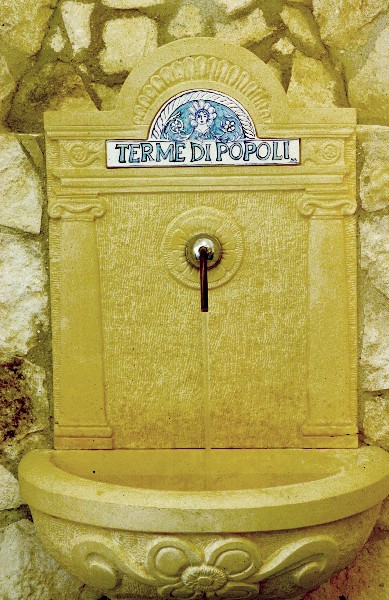
Foto dari rete.comuni.italiani.it
Air yang jumlahnya sedikit rupanya cukup untuk semua. Tidak perlu rebut air ala Indonesia. Indonesia memang di beberapa wilayahnya masih kekurangan air bersih. Di beberapa wilayah lagi ada isu air bersih yang ada sudah dibeli oleh perusahaan air minum. Air itu lalu dikemas dalam botol. Lalu, air yang gratis didapat dari alam itu jadi berbayar setelah ‘dibotolkan’. Keran air di tengah kota,

Musim panas di benua Eropa ini menjadi pelajaran penting untuk kita semua. Khususnya yang sedang berkunjung ke Eropa. Panasnya minta ampun. Hari ini saja, Kamis 6/8/2015 diperingati sebagai hari terpanas sepanjang tahun. Suhu hari ini memang panas. Di daerah pegunungan dengan ketinggian 400-an meter saja suhu bisa naik 34°Celcius.

Suhu ini tentu membuat banyak orang harus minum banyak air. Selain mencari teduhan yang menyejukkan. Di Eropa pada umumnya saat ini, dari Juni sampai Agustus, banyak orang membawa air dalam perjalanan. Selalu ada botol aqua di tangan, di dalam tas, dan juga di atas sepeda kala bersepeda. Tubuh memang butuh banyak air. Seperti kita di Indonesia tentunya seperti di Jakarta yang butuh banyak air untuk tubuh.

 Di Eropa seperti Italia dan Prancis pengalaman musim panas ini jadi unik. Di kota-kota selalu ada keran air. Di berbagai sudut kota selalu ada keran air yang selalu mengeluarkan air dengan volume kecil. Kerannya memang kecil tetapi cukup untuk semua.

di kota Bologna, tempat saya menginap selama bulan Juli yang lalu, misalnya di berbagai sudut kota ada keran air. Saya datang ke kota ini pada musim dingin tahun 2014 yang lalu. Di pusat kota belum ada keran air. Saya heran ketika pada Juli lalu ada keran air. Keran itu rupanya disediakan hanya pada musim panas saat banyak orang butuh banyak air. Keran itu tentu saja tinggal dipasang. Airnya sudah ada sejak kota itu dibangun. Jangan heran jika saat musim panas, keran itu tinggal dihubungkan dengan sumber air yang sudah ada di bawah jalan atau halaman kota. Hampir semua kota-kota di Italia sudah menerapkan sistem ini. Di Parma dan Milan atau Roma juga sudah seperti ini.

Sekali lagi keran itu kecil etapi cukup untuk semua. Kok bisa? Ya di sini semua orang belajar untuk antri. Saya masuk dalam antrian itu pada Juli lalu. Tidak ada yang rebut. Malah setiap orang berebut mendahulukan orang lain. Saya kaget. Padahal di Indonesia rebut hadiah lebaran saja bisa jatuh korban. Saya salut dengan amsayarakat di sini.

Dengan ini tidak perlu lagi beli banyak air di toko. Cukup bawa botol dari rumah beserta airnya. Kalau habis tinggal diisi di keran yang ada di seluruh kota. Airnya bersih. Jangan takut meminumnya. Saya sudah berkali-kali meminumnya terutama di musim panas. Segar dan enak. Untuk memperolehnya juga mudah. Tidak perlu rebut.

 Betapa air memang mesti gratis dan untuk semua masyarakat. Di bagian Utara Italia, seperti kota Napoli dan beberapa kota di sekitarnya, pemerintah daerah sudah berhasil menggratiskan air untuk masyarakat. Beberapa perusahaan air minum Italia yang beroperasi di daerah itu diwajibkan untuk menyediakan air gratis bagi rakyat. Bukan saja untuk air minum tetapi juga untuk kebutuhan lain. Di Italia memang tidak dibedakan air minum dan air untuk kebutuhan lain. Semuanya berkualitas sama. Jangan heran jika kita bisa minum langsung air yang ada di kamar mandi.

Indonesia yang wilayah airnya lebih besar dari daratan mestinya bisa membuat seperti ini. Yakin juga bahwa Indonesia suatu saat akan menikmatinya. Pelan-pelan tetapi pasti. Asal mulai saat ini.


Bologna, 22/7/2015
Gordi


Kamu memang cantik
Aku tak akan meragukan itu
Dan mungkin siapa pun mengakui itu
Kecantikanmu sudah terkenal

Memang kamu cantik
Mataku tidak bisa membohonginya
Betapa kecantikanmu membuatku kagum
Betapa indahnya ciptaan Tuhan

Kamu cantik sekali
Hatiku tak bisa menipu
Dalam hati memang aku mengakui kamu cantik
Sungguh indah jika hatimu juga merasakan ini

Kecantikanmu membuatku untuk segera 
Dan tidak boleh tertunda
Mengatakan kamu akan jadi milikku
Hampir saja kuucapkan saat kita bertemu waktu itu

Sayang aku harus memikirkan lagi
Pantaskah si cantik ini jadi milikku?
Aku temukan jawabannya
Aku katakan tidak

Dia tetap cantik
Dan aku mengaguminya
Tapi aku tidak mencintainya
Maka aku tak boleh memilikinya

Cinta memang mesti jadi dasar
Untuk hidup bersama selamanya
Bukan nafsu untuk memiliki
Bukan pula asal suka sesaat

Salam untukmu si cantik

Molveno, 6/8/15
Gordi

Tra il bene e il male. Il bene viene da Gesù e il male viene dal Satana. Gesù vince il Satana. Il bene vince il male.

Gesù ha il potere di cacciare via il Satana. Il Satana conosce bene Gesù. Il Satana va ad incontrare Gesù. Lui sa che Gesù ha il potere. Ha chiesto di mandar via. Gesù subito lo manda via. Gesù vince.

Il Satana regna anche a noi. Se vogliamo che Dio regni su di noi basta chiedere a Gesù di cacciarli via. Chiediamo veramente a Gesù di caciare via questo Satana che regna su di noi.


Vorrei subito liberarmi dal Satana che regna su di me.

SHARE MY BLOG

photo, here
I want to share my blog. I will happy if my friends read my writing. I am not an author, but I like writing. I am happy because some of my friends told me that my writing is good. I want to more than it. Not also good, but how it's useful for others. So, I write for the others. I write so that my friends read it.

Today, I try to share my writing at my social network (google plus). Last days, I share it on my Facebook. But, for two days, I will go out from Facebook. I can not open it when I am in Bologna for the spiritual retreat. I hope I can do it well. So, in these two days, I can write on my blog and share it at my google plus.  

foto, qui
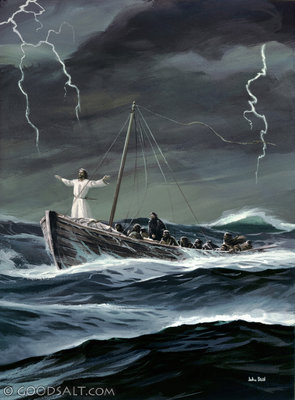
Perché devi avere la paura se rimani con Gesù? La domanda che ho fatto a coloro che sono intorno a Gesù sulla barca. Non hai la fede a Lui?

Anche noi siamo attorni di Gesù ma come loro abbiamo anche la paura. Ho sempre paura delle cose nuove, tranne paura della cosa buia. Certamente ho paura nel buio. Ma se anche paura nella cosa luminosa? Questo vuol dire c’è qualcosa che non va bene. Può darsi questa cosa è la fede. Manca la fede. Non c’è la fede.

Se c’è la fede non c’è la paura. I discepoli non hanno la fede, non hanno la fiducia. Anche noi, a volte è capitato come i discepoli abbiamo paura perché poca fede, poca fiducia a Gesù.

Gesù, insegnaci ad andare avanti perché sappiamo che sei con noi nel nostro cammino.

GENERAL AUDIENCE POPE FRANCIS
Saint Peter's Square
Wednesday, 17 June 2015

The family - 19. Death

Dear Brothers and Sisters, Good morning!
In the course of our catecheses on the family, today we take direct inspiration from the episode narrated by Luke the Evangelist, which we have just heard (cf. Lk 7:11-15). It is a very moving scene, which shows us Christ’s compassion for those who suffer — in this case a widow who has lost her only child — and it also shows us Jesus’ power over death.

Death is an experience which touches all families, without exception. It is part of life; yet, where familial love is concerned, death never seems natural. For parents, surviving their own children is particularly heartbreaking; it contradicts the fundamental nature of the very relationships that give meaning to the family. The loss of a son or daughter is like time stopping altogether: it opens a chasm that swallows both past and future. Death, which takes away a little child or young person, is a blow to the promises, to the gifts and the sacrifices of love joyfully brought to the life we gave birth to. Frequently parents come to Mass at Santa Marta with the photo of a son, a daughter, a baby, a boy, a girl, and they say to me: “He’s gone, she’s gone”. And their faces are filled with grief. Death touches us and when it is a child’s, it touches us profoundly. The whole family is left paralyzed, speechless. And the child left alone by the loss of one or both parents suffers in a similar way. She asks: “Where is my daddy? Where is my mama? — Well, she is in heaven” — “Why can’t I see her?”. This question covers the agony in the heart of a child left alone. The emptiness of abandonment that opens up in him is made all the more agonizing by the fact that he doesn’t have the life-experience to even “give a name” to what has happened. “When is daddy coming back?” When is mama coming?”. What do you say when a child suffers? This is what death in the family is like.

In these cases, death is like a black whole that opens up in the life of the family and for which we have no explanation. And at times we even go so far as to lay the blame on God. How many people — I understand them — get angry with God, blaspheme: “Why did you take my son, my daughter? There is no God, God does not exist! Why did he do this?”. We hear this so often. But this anger is basically what comes from the heart in great pain; the loss of a son or of a daughter, of a father or of a mother, is a great sorrow. This happens over and over in families. In these cases, I said, death is like a hole. But physical death has “accomplices” even worse than itself, which are called hate, envy, pride, greed; in short, the sin of the world which works for death and makes it even more painful and unjust. Family bonds seem to be the predestined and helpless victims of these helping powers of death, trailing the history of mankind. Let us think of the absurd “normality” with which, at certain moments and in certain places, events adding to the horror of death are provoked by the hatred and indifference of other human beings. May the Lord keep us free from being accustomed to this!

In the People of God, by the grace of his compassion granted in Jesus, many families prove by their deeds that death does not have the last word: this is a true act of faith. Every time a family in mourning — even terrible mourning — finds the strength to guard the faith and love that unite us to those we love, it has already prevented death from taking everything. The darkness of death should be confronted with a more intense work of love. “My God, lighten my darkness!”, is the invocation of evening prayer. In the light of the Resurrection of the Lord, who abandons none of those whom the Father entrusted to him, we can take the “sting” out of death, as the Apostle Paul says (1 Cor 15:55); we can prevent it from poisoning life, from rendering vain our love, from pushing us into the darkest chasm.

In this faith, we can console one another, knowing that the Lord has conquered death once and for all. Our loved ones are not lost in the darkness of nothing: hope assures us that they are in the good and strong hands of God. Love is stronger than death. Thus, the way is to let love grow, make it stronger, and love will guard us until the day that every tear shall be wiped away, when “death shall be no more, neither shall there be mourning nor crying nor pain any more” (Rev 21:4). If we allow ourselves to be sustained by this faith, the experience of grief can generate even stronger family bonds, a new openness to the pain of other families, a new brotherhood with families that are born and reborn in hope. To be born and reborn in hope, this gives us faith. But I would like to stress the last phrase of the Gospel which he heard today (cf. Lk 7:11-15). After Jesus brought the young man, the only son of a widow, back to life, the Gospel says: “Jesus gave him back to his mother”. And this is our hope! All our loved ones who are gone, the Lord will give them back to us and we will be together with them. This hope does not disappoint! Let us remember well this action of Jesus: “And Jesus gave him back to his mother”, thus the Lord will do with all our loved ones in the family!

This faith protects us from the nihilist vision of death, as well as from the false consolations of the world, so that the Christian truth “does not risk mixing itself with myths of various types”, surrendering to superstitions beliefs (Benedict XVI, Angelus, 2 November 2008). Today it is necessary that Pastors and all Christians express in a more concrete way the meaning of the faith in regards to the family experience of grief. We should not deny them the right to weep — we must weep in mourning — “Jesus wept” and was “deeply troubled” by the grave loss of a family that he loved (cf. Jn 11:33-37). We can draw from the simple and strong testimony of the many families who have been able to grasp, in the most arduous transition of death, the safe passage of the Lord, Crucified and Risen, with his irrevocable promise of the resurrection of the dead. God’s work of love is stronger than the work of death. It is of that love, it is precisely of that love, that we must make ourselves hard-working “accomplices”, with our faith! And let us remember Jesus’ deed: “And Jesus gave him back to his mother”, so he will do with all our loved ones and with us when we meet again, when death will be definitively conquered in us. It was conquered by Jesus’ Cross. Jesus will give us all back to the family!

Special greetings:
Tomorrow, as you know, the Encyclical on the care of “our common home” , which is creation, will be released. This “home” of ours is deteriorating and this harms everyone, especially the poorest. Mine is therefore a call to responsibility, based on the task God gave to human beings in creation: “to till and keep” the “garden” in which he placed him (cf. Gen 2:15). I invite all people to accept with an open heart this Document, which is in line with the Social Teaching of the Church.

This coming Saturday is the World Day for Refugees, sponsored by the United Nations. Let us pray for the many brothers and sisters who seek refuge far from their land, who seek a home where they will be able to live without fear, that they might be ever respected in their dignity. I encourage the work of those who bring them aid and I wish for the international community to act unanimously and effectively to prevent the causes of forced emigration. And I invite all of you to ask forgiveness for the people and institutions who close the door to these people who seek a family, who seek protection.

I greet the English speaking pilgrims and visitors taking part in today’s Audience, including those from England, Scotland, Zambia, Hong Kong, Indonesia, Japan, Pakistan, Vietnam, Puerto Rico and the United States. I pray especially for families mourning loved ones. May the Church’s pastors and communities come to their aid in prayer, acts of concrete help, and with tenderness. Upon all of you and your loved ones, I invoke the Lord Jesus’ abundant blessings of peace and joy. May God bless you all!

© Copyright - Libreria Editrice Vaticana

ANGELUS POPE FRANCIS
Saint Peter's Square
Sunday, 14 June 2015

Dear brothers and sisters, Good morning!
Today’s Gospel is composed of two very brief parables: that of the seed that sprouts and grows on its own, and that of the mustard seed (cf. Mk 4:26-34). Through these images taken from the rural world, Jesus presents the efficacy of the Word of God and the requirements of his Kingdom, showing the reasons for our hope and our commitment in history. 

In the first parable, attention is placed on the fact that the seed scattered on the ground (v. 26) takes root and develops on its own, regardless of whether the farmer sleeps or keeps watch. He is confident in the inner power of the seed itself and in the fertility of the soil. In the language of the Gospel, the seed is the symbol of the Word of God, whose fruitfulness is recalled in this parable. As the humble seed grows in the earth, so too does the Word by the power of God work in the hearts of those who listen to it. God has entrusted his Word to our earth, that is to each one of us with our concrete humanity. We can be confident because the Word of God is a creative word, destined to become the “full grain in the ear” (v. 28). This Word, if accepted, certainly bears fruit, for God Himself makes it sprout and grow in ways that we cannot always verify or understand. (cf. v. 27). All this tells us that it is always God, it is always God who makes his Kingdom grow. That is why we fervently pray “thy Kingdom come”. It is He who makes it grow. Man is his humble collaborator, who contemplates and rejoices in divine creative action and waits patiently for its fruits.

The Word of God makes things grow, it gives life. And here, I would like to remind you once again, of the importance of having the Gospel, the Bible, close at hand. A small Gospel in your purse, in your pocket and to nourish yourselves every day with this living Word of God. Read a passage from the Gospel every day, a passage from the Bible. Please don’t ever forget this. Because this is the power that makes the life of the Kingdom of God sprout within us.

The second parable uses the image of the mustard seed. Despite being the smallest of all the seeds, it is full of life and grows until it becomes “the greatest of all shrubs” (Mk 4:32). And thus is the Kingdom of God: a humanly small and seemingly irrelevant reality. To become a part of it, one must be poor of heart; not trusting in their own abilities, but in the power of the love of God; not acting to be important in the eyes of the world, but precious in the eyes of God, who prefers the simple and the humble. When we live like this, the strength of Christ bursts through us and transforms what is small and modest into a reality that leavens the entire mass of the world and of history.

An important lesson comes to us from these two parables: God’s Kingdom requires our cooperation, but it is above all theinitiative and gift of the Lord. Our weak effort, seemingly small before the complexity of the problems of the world, when integrated with God’s effort, fears no difficulty. The victory of the Lord is certain: his love will make every seed of goodness present on the ground sprout and grow. This opens us up to trust and hope, despite the tragedies, the injustices, the sufferings that we encounter. The seed of goodness and peace sprouts and develops, because the merciful love of God makes it ripen.

May the Holy Virgin, who like “fertile ground” received the seed of the divine Word, sustain us in this hope which never disappoints.

After the Angelus:
Dear brothers and sisters, today is World Blood Donor Day. Millions of people contribute, in a silent way, to aid our brothers and sisters in difficulty. To all donors, I express appreciation and I invite especially young people to follow their example.
I greet all of you, dear Romans and pilgrims: parish groups, families and associations. In particular, I greet the faithful who have come from Debrecen (Hungary), Malta, Houston (United States) and from Panama; and from Italy: the faithful of Altamura, Angri, Treviso and Osimo.

A special thought goes to the community of Romanian Catholics who live in Rome and to the young confirmands of Cerea.

I greet the group who remember all missing persons and assure them of my prayers. I am also close to all workers who in solidarity defend the right to work.

As announced, an Encyclical Letter on the care of creation will be released on Thursday. I invite you to accompany this event with renewed attention to the situation of environmental deterioration, as well as recovery, in your countries. This Encyclical is addressed to everyone: let us pray that all may receive its message and grow in responsibility for the common home that God has entrusted to all.

To all I wish a happy Sunday. Please, do not forget to pray for me. Have a good lunch. Arrivederci!
© Copyright - Libreria Editrice Vaticana

La fede delle due donne

FOTO, da qui
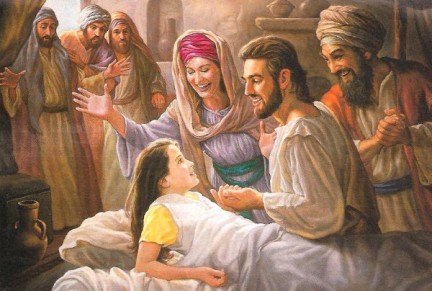
Il vangelo di questa domenica, 28 giugno 2015, ci racconta la fede delle due donne. Le donne che hanno grande passione di guarire, di entrare nella nuova vita. Perciò, la fede in questo senso anche vuol dire avere la vita nuova.

La prima donna ci mostra l’atto della fede. Vuole toccare Gesù. Toccare per lei è una medicina per guarire la sua malattia. Ha detto, basta toccare Gesù, sarò guarita. Ha una fiducia a Gesù. La fiducia che nasce dalla fede a Gesù. La fede che porta alla vita nuova.

Un’altra donna anche quasi simile. Solo che la fede di quella dona rappresenta la fede dei suoi genitori. Il Giàirò invita Gesù a vedere sua figlia. Lui ha detto che basta mettere le mani sulla sua figlia, sarà guarita. Giàirò è capo della sinagoga. Sa bene Gesù. Ha fiducia a Gesù che ha la potenza divina.

Chiediamo Gesù di darci questa fiducia. Chiediamo la nuova vita a Gesù. Chiediamo la fede che ci da la vita nuova a Gesù.

Buona domenica

Paolo

Agostino nel discorso che leggiamo oggi nell’ufficio ha detto, Pietro che deriva da pietra. Non è pietra da Pietro. Gesù invece ha detto, Tu sei Pietro e su questa pietra edificherò la mia Chiesa (Mt 16, 18).
Pietro

Pietro è una grande persona. Come pietra, Lui è—diciamo—il fondamento della chiesa. Ogni vescovo dovrebbe essere come Pietro,. Anzi, primo vescovo di Roma, primo Papa è Pietro.

Non solo Pietro ma anche Paolo. Paolo è un grande santo. Uomo molto intelligente, scrittore e predicatore. Ha cambiato la sua vita, dal cattivo al buono. Dio gli da la strada per cambiare la vita.


Chiediamo al Signore di avere questa conversione di San Paolo e di avere un compito come Pietro cioè il fondamento della chiesa, fondamento della nostra fede, nostra vita, che è Gesù Cristo.


Un centurione ha una grande fede. La fede che ha la forza. Ha chiesto a Gesù di guarire il suo servo. La sua fede gli da la capacità di conoscere se stesso. Non sono degno, ha detto. Basta una parola e sarà guarito, ha affermato a Gesù.

È veramente una grande persona, questo centurione. Lui è grande ma anche diventa piccolo davanti a Gesù. Conosce la sua incapacità di guarire il suo servo. Ha chiesto a Gesù perché sa e ha fiducia a Gesù.

La fede ci aiuta a conoscere la nostra debolezza, la nostra incapacità. Perciò, con fede, chiediamo la forza, la capacità al Signore, di conoscere noi stessi. (Vang. 27/7/15)

THE CHURCH OF SAINT MARY, TREVIGLIO, BERGAMO


This is the Catholic Church of Santa Maria Annunciata. It is in Treviglio, Bergamo, Italy. In this Church we participated in the funeral mass of the Mrs Maria, the sister of Father Germano, SX. The Church is part of the Milan diocese.

Father Marco, SX celebrated this mass. Two Xaverian Fathers from the Vicenza community have participated. There were many people. Mrs Maria is the activist in this Church specially at the ecumenism and the Caritas activity.

I read the psalm and my friends Hotman read the first lecture. And one of the Mrs Maria’s family reads the prayer of the faithful. Father Marco in his homily said that we are here to accompany the Mrs Maria’s family and specially to accompany the Father Germano, the brother of the Mrs Maria. “He is in Indonesia but here, there were two Indonesian students with us,” said Father Marco.

The family and the Father Marco, you are not alone. We are with us in this Church. Thank you all.

PRAYING AND DRIVING 

I praised for my friend, Father Marco. Not because he is a good driver or a good prayer. Not. I respect because he did two activities in one moment. It’s like an utopia, but it’s really. It looks danger, but we did it.


When we returned from Treviglio to Parma on 20 June last week, we did it. In the first, I slept for 20 minutes. Then, father Marco asked me to pray together. He leads us to pray the rosary. We did it completely, with five mysteries.

It is the new experience for me. I did the rosary during the walking, but not during driving the car. Father Marco invited us to remember the presence of God in our travelling. God always presents in every moment. So, I thanks to Father Marco that have reminded us to aware his presence.


Bisogna la volontà per arrivare alla nostra richiesta. Un lebbroso ha chiesto a Gesù di purificarlo. Non ha paura di chiedere a Gesù. La volontà che gli ha insisto alla sua richiesta nasce dal suo cuore perciò ancora con il suo cuore ha chiesto a Gesù.

Gesù ha il potere di purificarlo. Alla fine la richiesta è stata accettata. È stato purificato. Gesù non ha istituto di purificarlo. La richiesta è stata data dal uomo lebbroso.

Anche noi nel nostro cuore ha la volontà di chiedere qualcosa a Gesù. Chiediamo pure con la chiarezza e purezza. Sappiamo che Gesù sa già quello che chiederemo. Però, bisogna anche la nostra volontà di chiederlo.
Powered by Blogger.